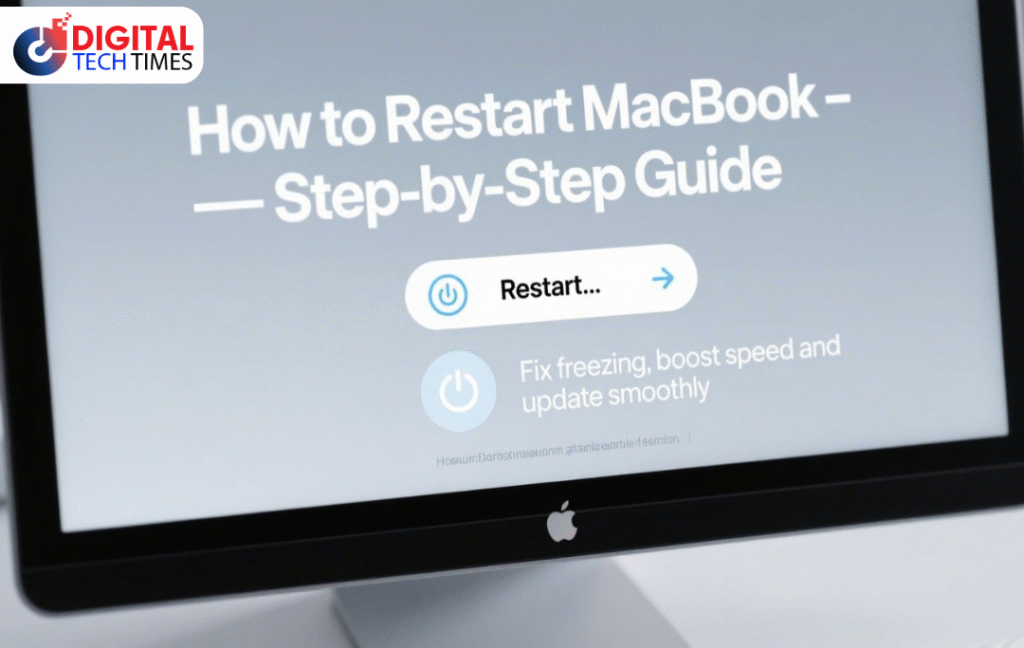
If you’re a Mac user, you should know how to restart MacBook correctly in order to fix common issues, improve performance, and use software updates correctly. Whether you own a MacBook Air or a MacBook Pro, this article will walk you through the process—normal restarts, as well as handling a frozen computer—so your Mac will run smoothly.
Whether you are asking yourself how to restart my MacBook, or you need steps on how to restart MacBook and it won’t budge, this guide is for you.
Why Restarting Your MacBook Matters
Backing up your MacBook last may seem straightforward, but it’s a good way to:
- Refresh. the system memory
- Repair bugs or hung programs
- Install system and software patches
- Improve responsiveness and speed
You need a proper reboot to maintain your Mac in top shape. So let’s go through it the best way possible step by step.
Complete Guide: How to Restart MacBook
Here’s how to simply restart your MacBook from the Apple menu—this should work on macOS Monterey, Ventura, and other newer versions.
Step 1: Save Your Work
Save any open browser windows or documents before resuming to avoid loss of data.
Step 2: Open the Apple Menu
Click on the Apple logo in the top left corner of your screen.
Step 3: Click “Restart”
Select Restart. from the menu.
Step 4: Confirm Restart
A restart window will appear. If you have something critical you’re working on, uncheck “Reopen windows when logging back in” before restarting. And that’s it you need to do—your MacBook will restart in a few seconds.
How to Manually Restart MacBook
Sometimes your screen will freeze and you won’t be able to navigate to the Apple menu. Then you will need to manually restart your MacBook:
Method 1: Use the Power Button
- For 10 seconds, press and hold the power button (or Touch ID button on new MacBooks).
- The screen of mackbook will go dark and the macbook will shut down.
- After waiting for 10 seconds, hold down the power button on the TV again.
This is helpful when your Mac is completely frozen.
How to Restart MacBook When Frozen
If your MacBook is stuck and you are unable to move the cursor or click on anything, try this trick:
Force Restart via Keyboard
- Press and hold Control + Command + Power button (or Touch ID).
- Press the button for some time until you see your screen go completely dark.
- Release the keys. Your MacBook will reboot automatically.
Note: Forcing the restart will delete any unsaved work, so do it only if you have no choice.
How to Restart Safari on MacBook Air
If your browser hangs or freezes, you are not required to restart the whole Mac. The correct way to restart Safari is explained in the steps below.
Method:
- Press on Safari in the top menu bar.
- Select Quit Safari or press Command + Q.
- Wait for a second, and then exit Safari from the Applications folder or Dock.
If Safari won’t close, click Force Quit:
- Press Command + Q or select Quit in the menu → Commence a new session in Safari.
- Choose Safari and hit Force Quit
This will shut down the browser and enable you to open it immediately without interrupting your other applications.
How Do I Reboot My MacBook for Software Updates?
Rebooting following software updates is essential. Your Mac will occasionally automatically require you to reboot following an update installation. To reboot manually:
- Press the Apple logo → Restart
- If asked, agree to install updates at restart
This ensures all the updates are installed correctly and your Mac operates well.
How to Restart Mac for Better Performance
If your Mac is crawling along, a restart will take care of it:
- Clears RAM usage
- Ends background processes
- Flushes temporary system files
Restarting at least once a week may avoid lagging and overheating, especially if you find yourself leaving your MacBook in Sleep mode rather than shutting down.
Quick Recap: Restarting Your MacBook
| Scenario | Best Restart Method |
| Normal restart | Apple menu → Restart |
| Frozen MacBook | Control + Command + Power |
| MacBook won’t respond | Hold power button 10 seconds → Turn on |
| Safari only freezes | Command + Q or Force Quit → Reopen Safari |
| Post-update reboot | Apple logo → Restart (apply update) |
Final Thoughts
Reboot MacBook is something everyone needs to know. From performance problems, hung programs, or simply needing to begin again, a reboot is the easy and instant solution. With this tutorial, you’ll always have the best way to reboot MacBook—no matter what.
Don’t forget to bookmark this handbook to refer to it later and share with other Mac users. For additional macOS and Apple device tips, keep watching our tech blogs.
FAQs – How to Restart MacBook
1. How do I restart my MacBook without a mouse?
Use the keyboard command: Control + Eject (or Power). When the restart window appears, press Return to authenticate. On newer systems, use Control + Command + Power.
2. Can I restart my MacBook using Terminal?
Yes. Open the Terminal app and type:
bash
CopyEdit
sudo shutdown -r now
Hit Return and type your password to start the reboot.
3. Is it safe to force restart my MacBook?
Force restarts are only to be undertaken if your Mac freezes. Safe for the system, but can cause loss of unsaved data.
4. What’s the difference between restart and shutdown?
Restart temporarily powers down your Mac and starts it up immediately. Shutdown powers down the Mac until you turn it on again.
5. How often should I restart my MacBook?
We recommend that you reboot your Mac every week, especially if you have programs consuming a lot of resources or you left your computer running for days.
Share this content: